
Fishes

Sabanejewia aurata
Sabanejewia aurata
In Bulgaria in the past the species was found in the upper and middle reaches of most Danube tributaries, as well as in many of the tributaries of the Maritsa River. It is found in the river Struma and its tributary Rila River, in the rivers Dospat and Kamchia. Subsequently, the species has been confirmed many times for the rivers of the Danube basin - Iskar and its tributaries, Ogosta, Vit, Osam and Yantra. It is also found in the Archar and Lom rivers.
Typical habitats of the Balkan Pin are middle and upper reaches of permanent rivers with sandy-gravel bottom and fast current.
The breeding season of the species is from the end of April to the beginning of June. Female fertility is low - about 300 caviar grains, which are deposited directly on the stones.
The necessary measures for the protection of the species are the restriction of the hydrotechnical construction in the middle and upper reaches of the Danube tributaries.
The species is found in Central and Eastern Europe.
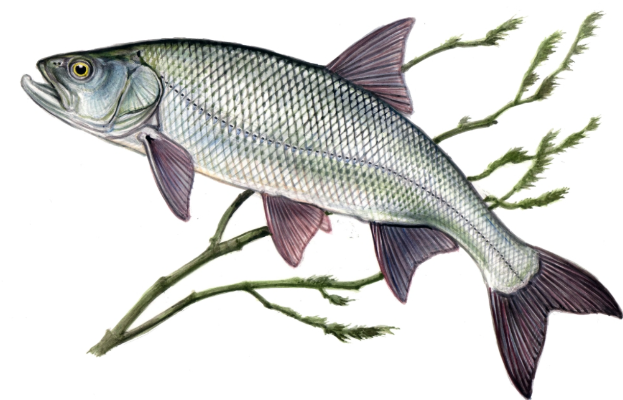
Aspius aspius
Aspius aspius
In the past in Bulgaria the species was found in the Danube River, the adjacent swamps and the lower reaches of some of the tributaries - Iskar, Vit and Osam. It has also been found in the rivers of the Aegean Basin - Struma, Maritsa, Tundzha, Vacha, as well as in the Kamchia River
Typical habitats of Raspera are the lower reaches of permanent rivers, but it is also found in estuarine waters.
Breeds in April-May by migrating upstream. It spawns on rocky substrate and fast current. Predatory species. It feeds on fish, fallen insects and even small waterfowl.
The necessary measures for the protection of the species are to limit the construction of hydrotechnical facilities on the rivers Struma, Maritsa and the Danube tributaries.
The species is found in Central and Eastern Europe.


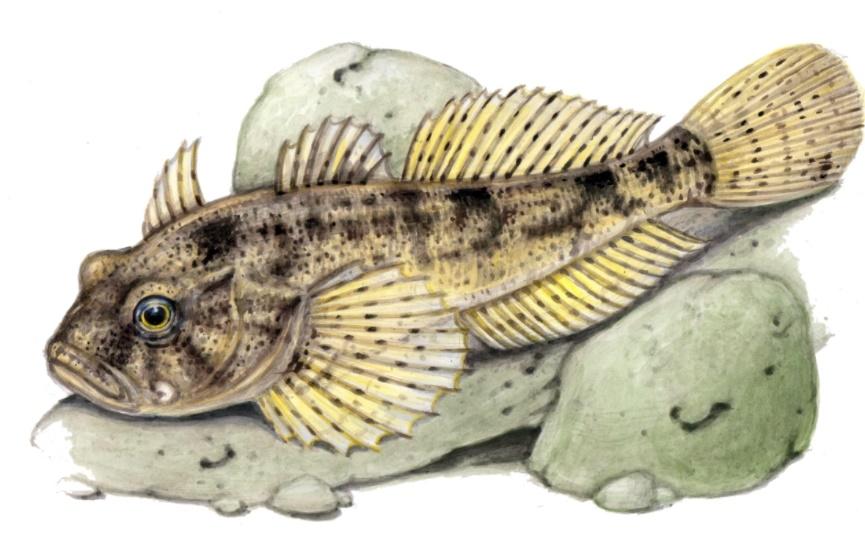
Cottus gobio
Cottus gobio
The head is a critically endangered species. In Bulgaria it is found in the upper reaches of some Danube tributaries - Ogosta, Iskar, Vit, Osam and Yantra. In recent years, it has become a very rare species with declining numbers and has become extinct in many of its previous habitats.
The species is benthic and its preferred habitats are the upper reaches of the rivers with sandy and gravel bottoms and fast-flowing, cold waters. It feeds on various invertebrates and small fish.
The body of the head is naked, without scales and is slimy to the touch. The color is grayish with dark spots that often cover the whole body and it looks dark.
The species is extinct due to hydrotechnical activities, poaching, water pollution, bare logging in mountainous areas, introduction of alien species.
It is distributed in rivers throughout Europe, excluding Italy, Greece, Ireland and northern Norway, Sweden and Finland.